
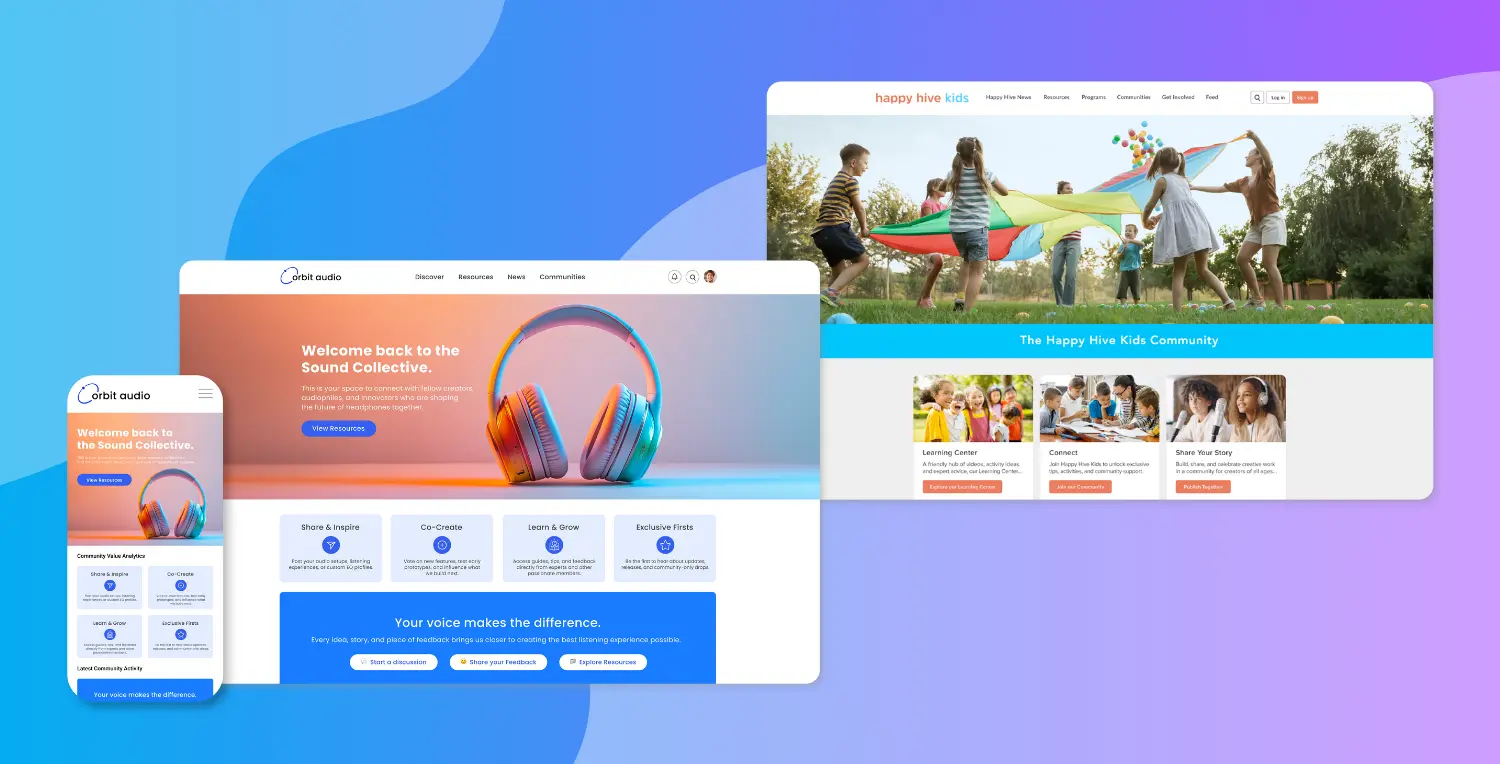
Many retail brands struggle to stand out, retain customers, and build lasting relationships in a market saturated with choice. Without deeper engagement, one-time purchases remain just that: one-time.
Relying solely on ads, email, or social media doesn’t create the kind of connection that drives repeat purchases, loyalty, or advocacy. As customer acquisition costs rise and customer expectations grow, brands that fail to build genuine communities risk falling behind.
An online retail community offers a powerful way to connect with customers, create shared value, and build long-term engagement. Done right, retail customer engagement can increase retention and brand awareness, reduce support costs, and turn buyers into brand advocates. This guide breaks down exactly how to build, grow, and manage a high-performing online retail community that supports your business goals.
Key takeaways
- Online communities can increase retention, conversion rates, loyalty, and revenue through customer engagement.
- The right online retail community platform matters. Look for retail community software that supports AI, automation, integration, and scalability.
- The best online retail community software platforms include Verint Community, Bettermode, Higher Logic and Salesforce Experience Cloud.
- Clear goals, consistent content, and a branded experience are essential to long-term retail community success.
- Social Edge Consulting supports retail and ecommerce brands with community consultation, community migrations, and full-service community strategy.
What is an online retail community?
An online retail community is a digital space where customers interact with each other and your brand around shared interests, products, and experiences.
Unlike social media audiences, which are largely passive, communities support two-way engagement. Members ask questions, share insights, review products, and help each other, all within a branded environment that you can moderate, shape, and grow.
Read more about what is an online community
Examples of online retail communities include:
- Retail customer forums hosted on platforms like Verint Communities or Bettermode
- Product discussion boards embedded in a Shopify or Salesforce store
- Private retail communities for loyalty members using tools like Higher Logic
- Branded retail support hubs built with Khoros or Salesforce Experience Cloud
The key difference between an audience and a community is interaction. In a community, your brand is just one of many voices. Customers engage with each other directly, sharing experiences, advice, and product feedback that often carries more trust and impact than content created by the brand itself.
Benefits of an online retail community
Investing in a community can deliver compounding benefits over time. Benefits of customer communities include:
1. Improved customer retention and conversion rates
Active community members are more likely to return, make repeat purchases, and stay engaged over time. By fostering a sense of belonging and ongoing value, communities reduce churn and increase customer lifetime value, turning occasional buyers into long-term, high-value customers.
2. Lower customer support costs
Customer support communities allow users to solve each other’s problems through forums and discussion. This peer-to-peer support can significantly reduce ticket volume, especially when combined with automation and intelligent knowledge management.
3. Brand advocacy and referrals
Communities often help cultivate brand advocates who promote your products organically, leave detailed reviews, and refer new customers. When built on a dedicated community or membership site, these advocates have a central place to share experiences, connect with others, and expand your brand's reach through authentic word-of-mouth.
Read more about the importance of community and customer focus
4. SEO and content generation
Online communities generate a continuous stream of user-generated content (UGC), including questions, answers, reviews, and product-related discussions. This fresh, relevant, and keyword-rich content strengthens your site’s SEO (Search Engine Optimization) by improving long-tail keyword coverage, increasing indexability, and driving sustained organic traffic. It also enhances your brand’s presence in AI-driven search tools like ChatGPT, Perplexity, and Claude, where high-quality UGC is often cited as a trusted source of information.
5. Product feedback and innovation
Product communities provide a direct line to your most engaged customers, making them a valuable source for continuous market research. Their feedback can help you refine existing products, test new features, identify unmet needs, and uncover trends early. Involving community members in the development process not only leads to better products but also builds loyalty by showing that their input directly influences your business decisions.
6. More customer data and insights
Modern online retail and e-commerce community apps offer advanced analytics tools that can provide insights on member activity, user engagement, sentiment trends, and retention patterns. These customer insights can uncover opportunities to optimize product development, improve merchandising, refine support content, and personalize marketing campaigns.
Read more about signs your business needs an online community
6 steps to create an online retail community
Now that we’ve seen how community groups can drive real results for your retail brand, it’s time to focus on how to build one. Here are six steps to build an online community for your retail business.
1. Define community goals for your retail business
Start with specific, measurable community objectives, OKRs and goals, for example:
- Support-driven goals: Reduce support ticket volume by 20% in 12 months
- Retention goals: Increase repeat purchase rate among members by 30%
- Brand advocacy goals: Grow brand ambassador program by 100 users this quarter
- Customer feedback goals: Collect 250 product ideas or feature requests per year
Clear retail community goals help you choose the right structure, features, and moderation strategy. They also help you make the business case internally for investing in enterprise-grade community software.
2. Choose the right community platform for your audience
The community platform you choose determines the user experience, functionality, and integration potential. Here is a breakdown of top community and customer experience platforms built for retail and ecommerce brands:
Bettermode
Bettermode is a flexible, modular platform (formerly Tribe) designed for fast-growing ecommerce businesses.
- Customizable layouts and design
- Integrations with Shopify, HubSpot, and other tools
- Community templates for feedback, ideation, and support
- Built-in gamification features
Best suited for mid-market and scaling retailers looking for speed and flexibility.
Khoros Communities
Khoros Communities is an enterprise-level platform focused on support, engagement, and omnichannel integration.
- AI-powered engagement and moderation tools
- Multi-language and global support
- Enterprise-grade security and compliance
Ideal for large retailers with high-volume communities and global reach.
Tip: Khoros was recently acquired, which may impact its roadmap, pricing, or support model. If you're evaluating options, explore the best khoros alternatives.
Higher Logic
Higher Logic is built for long-term engagement with strong automation and email tools.
- Ideal for subscription-based or membership-driven retailers
- Strong event, email, and campaign integration
- Community-driven engagement combined with marketing automation
Salesforce Experience Cloud
Salesforce Experience Cloud is best for teams already using Salesforce Commerce or CRM.
- Unified customer data and personalized community experiences
- Deep analytics and journey mapping
- Seamless integration with existing Salesforce workflows
Verint Communities
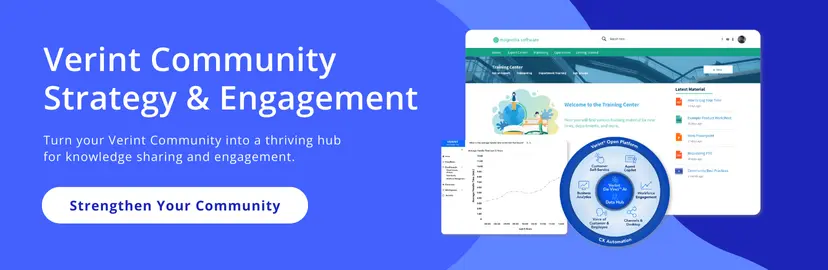
Verint Communities is a robust platform tailored for customer service, knowledge sharing, and CX strategy.
- Feature-rich forums, Q&A, and content surfacing
- AI-driven support deflection and automation
- Gamification, reputation scoring, and advanced analytics
Ideal for enterprise retailers managing complex support needs at scale.
Tip: Prioritize community platforms that support AI, automation, and omnichannel integration. This allows you to unify insights across web, mobile, and in-store interactions, giving your brand a more complete view of the customer journey.
3. Build your community brand and community guidelines
A strong brand presence and clear structure are essential for creating a community that feels cohesive, trustworthy, and worth joining. Successful communities are easy to navigate, aligned with your brand identity, and guided by clear expectations.
- Use consistent branding elements such as logos, colours, fonts, and tone of voice to create a seamless experience that reflects your retail brand.
- Develop clear community guidelines outlining acceptable behaviour, posting standards, and how moderation is handled to ensure a respectful and inclusive environment.
- Set up onboarding flows that include welcome emails, introduction threads, and featured posts to help new members understand how to participate.
- Define roles and permissions—such as members, moderators, and superusers—to manage engagement and highlight trusted contributors.
Branded community experiences increase credibility, improve retention, and can strengthen loyalty—especially when connected to exclusive rewards, programs, or membership benefits.
Tip: Start with a small group of early users and seed content before expanding. A curated, high-quality early experience sets the tone for long-term community health.
4. Develop a content strategy and customer engagement plan
A thriving retail brand community needs consistent, relevant content and meaningful interaction. Without an intentional plan to drive participation, even the best-designed platform will fall flat.
Build a community content calendar that includes:
- Weekly discussion prompts or themed conversations
- Product tips, how-tos, or usage ideas
- Behind-the-scenes updates from your team
- Member spotlights and user-generated stories
- Quick polls and interactive questions
- Exclusive content or early access offers for members
Assign a dedicated retail community manager or team to:
- Guide conversations and encourage contributions
- Acknowledge and elevate valuable member input
- Respond to questions and close feedback loops
- Share product updates, brand announcements, and event invites
Peer-to-peer engagement is one of the most powerful forms of community value. When members answer each other’s questions or share product insights, it builds trust and reduces reliance on formal support. Your job is to create the conditions for that interaction to happen naturally and consistently.
Tip: Focus on consistency over complexity. A simple, reliable content cadence and visible community leadership go much further than sporadic or overly polished campaigns.
Read more about online community engagement ideas for the summer
5. Incentivize community participation and loyalty
Strong communities thrive when members feel recognized and rewarded for their contributions. The right incentives can increase engagement, deepen loyalty, and drive repeat interactions.
Consider offering:
- Community gamification features such as badges, points, or reputation levels to recognize helpful or consistent members
- Exclusive access to beta tests, early product releases, private events, or limited-time discounts
- Loyalty program integration where members earn points or perks for participating in discussions, leaving reviews, or referring others
- Contests and giveaways that spotlight featured products, content, or member referrals
- Recognition programs including superuser roles, ambassador tiers, or member spotlights
Tip: Align incentives with your brand values and community goals. If your focus is on retention, prioritize perks that reward long-term engagement, such as personalized offers or loyalty-based unlocks.
6. Measure community success and adapt
Tracking performance is necessary for maintaining and improving your retail community over time. Use clear metrics to evaluate what's working, where engagement is strong, and where improvements are needed.
Key performance indicators (KPIs) for retail communities include:
- Active users (daily, weekly, monthly participation)
- Engagement rates based on posts, replies, and likes per user
- Support deflection through resolved questions and community-sourced answers
- Member retention, showing how long users stay active in the community
- Referral and conversion metrics from community content to purchases
- Loyalty outcomes, comparing behavior of community members to non-members
Most retail community platforms, like Verint and Salesforce Experience Cloud, offer built-in analytics dashboards to track these metrics. For deeper insight, connect community data with your CRM, analytics, or business intelligence tools.
Use a mix of performance data and direct member feedback to fine-tune your content, moderation approach, and engagement strategy—ensuring your community continues to grow in both value and impact.
Download our FREE framework for evaluating community platform success
Build a successful online retail community with Social Edge Consulting
Creating a high-performing online retail community takes more than the right community software. It requires a clear strategy, cross-functional alignment, long-term planning, and ongoing management. That’s where Social Edge Consulting comes in.
We help retail and ecommerce brands build and scale communities that drive measurable business outcomes. Our team supports you through every stage, including:
- Community strategy development and strategy, such as the design of loyalty and retention programs linked to community engagement
- Community platform migrations from legacy platforms to modern community solutions
- Implementation of custom community integrations and widgets, like AI and automation tools to enhance customer experience
- Community management support, training, and workshops to equip your team for long-term success
We work with industry-leading platforms such as Verint, Khoros, Bettermode, Higher Logic, and Salesforce Experience Cloud to deliver fully customized, scalable community solutions tailored to your brand.
Whether you're launching a new community or optimizing an existing one, Social Edge Consulting can help you build a connected customer experience that drives loyalty, engagement, and long-term revenue growth.
Ready to get started? Book an intro call with Social Edge Consulting to learn how we can help build a branded, high-impact community your customers will return to again and again.
Frequently asked questions (FAQs) about online community building for retailers
Which platform is best for ecommerce communities?
The best platform depends on your specific use case, size, and existing tech stack. Verint Communities is ideal for support-driven communities with strong knowledge sharing needs. Bettermode is well-suited for fast-growing ecommerce brands needing flexibility and Shopify integration. Higher Logic offers robust engagement and marketing automation for membership-based retailers. Salesforce Experience Cloud is best for teams using Salesforce CRM and Commerce, and Khoros delivers enterprise-grade tools for global, high-volume communities.
How do online communities impact customer retention?
Online communities increase retention by giving customers ongoing value beyond the initial purchase. When customers can ask questions, share experiences, and connect with others, they build trust with the brand, receive faster support, and engage more frequently, all of which lead to higher repeat purchase rates and lower churn.
Can community platforms integrate with customer loyalty programs?
Yes, most community platforms support loyalty program integration either natively or through APIs. This allows you to reward participation, such as posting, reviewing, or referring others, with loyalty points, badges, or exclusive perks that tie directly into your existing rewards program.
What role does AI play in retail community management?
AI improves efficiency and engagement by automating routine tasks and personalizing user experiences. It powers chatbots for instant support, uses predictive analytics to flag disengaged members, automates onboarding journeys, and recommends relevant content based on user behaviour—keeping the community active and aligned with customer needs.


